
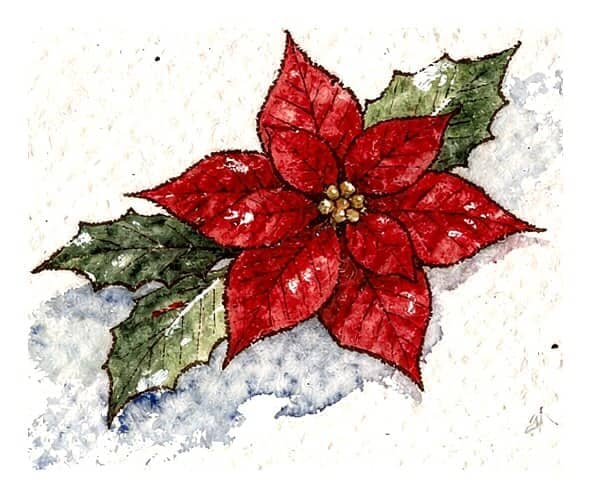
 True storyIn Polish, pająk means spider, and it is also the name of a folk decoration of straw and colored tissue paper that hangs from the ceiling.
VII · The World
How is Christmas celebrated in Poland?
True storyHow to read this bookReads aloud in 5 minutesAdded to the book
 Christmas magicIn Wielkopolska, the region around Poznań, the Gwiazdor brings the presents on Christmas Eve.


In Poland, the heart of Christmas is Wigilia, Christmas Eve, December 24, one of the high points of the whole year. Families wait for the first star, share a thin wafer with good wishes, and sit down to a supper with no meat, before many go to midnight Mass.
At a glance
- Christmas Eve: Wigilia, December 24
- Before supper: the opłatek, a thin wafer shared with good wishes
- The supper: traditionally twelve dishes, no meat
- Gift-bringers: Święty Mikołaj; the Gwiazdor in Wielkopolska; the Dzieciątko in Silesia
- Small presents: on mikołajki, December 6
Christmas words
In full, Poles wish each other Wesołych Świąt Bożego Narodzenia, merry holidays of God’s Birth. Said alone, Wesołych Świąt serves at Easter too.
say it
Wesołych Świąt
tap, and follow the star
- What it means
- merry holidays (wesoły means cheerful; święta are holidays)
- When to say it
- at Christmas (said alone, it serves at Easter too)
/vɛˈsɔwɨx ˈɕfjɔnt/
Poles also call Christmas Eve Gwiazdka, the little star, and a Christmas Eve present is a gwiazdka too.
Wigilia
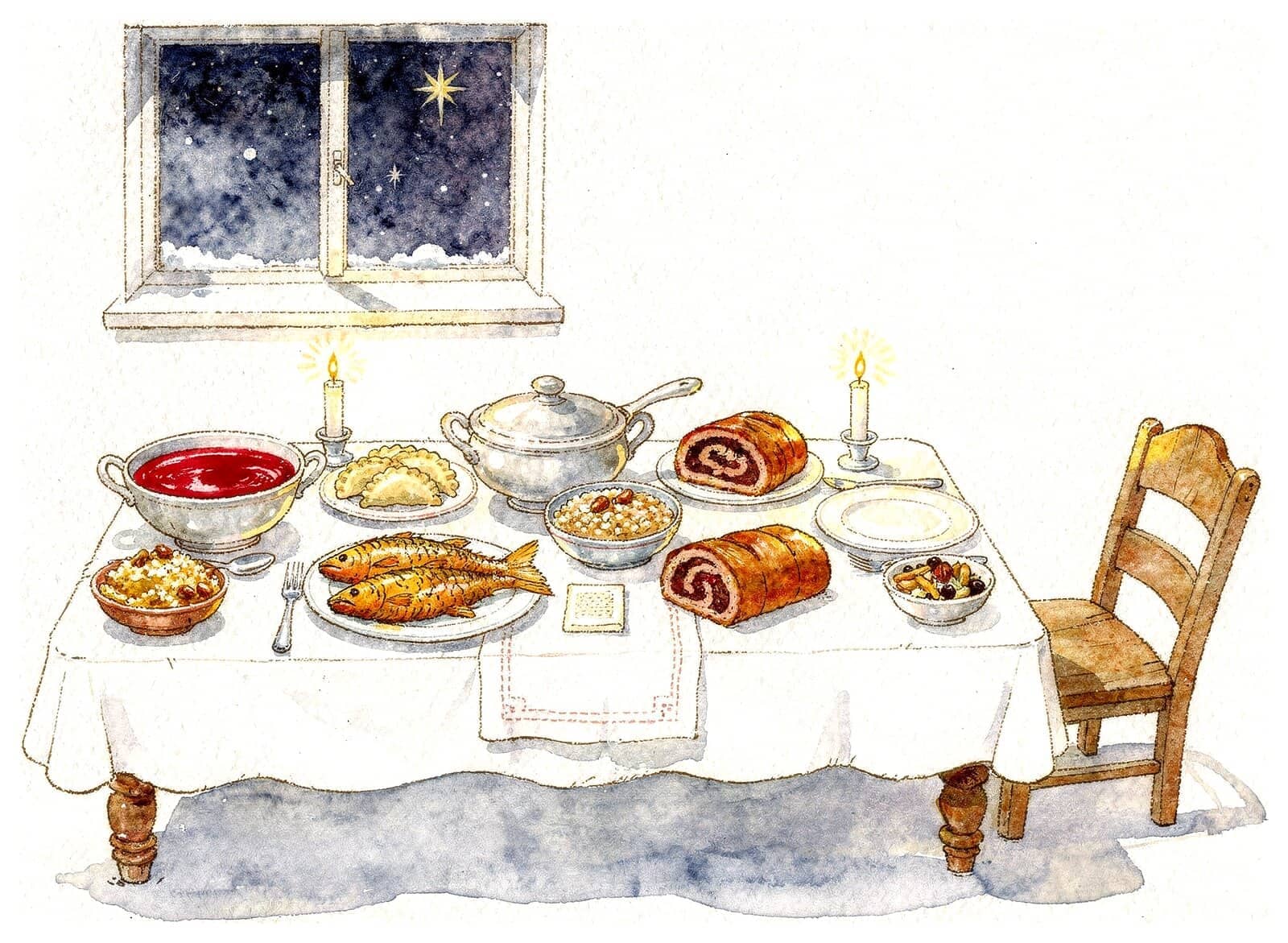
In many homes the tree is trimmed that very morning. Families wait for the first star to appear in the evening sky, a sign of the Star of Bethlehem, before they sit down.
Before the meal, everyone breaks off a piece of the opłatek, a thin wafer, and passes on wishes for health, peace and prosperity. Many families tuck a little hay under the tablecloth, for the manger, and set one extra place for an unexpected guest or for someone missed.
The supper is traditionally twelve dishes with no meat, said to stand for the twelve apostles or the twelve months. The table often holds clear red beet soup with tiny mushroom dumplings, carp, pierogi filled with cabbage and mushrooms, and for something sweet, makowiec, the poppy-seed roll, and kutia, wheat with honey and nuts.
Afterward families often sing kolędy, Poland’s carols, and many go to Pasterka, the midnight Mass.
Who brings the presents
December 6 is mikołajki, when people give each other small presents.
Christmas magicŚwięty Mikołaj, which is Polish for Saint Nicholas, brings children their Christmas presents. In some parts of Poland the Gwiazdor comes instead: in Wielkopolska, the region around Poznań, he brings the presents on Christmas Eve. And in Silesia, many families say the presents come from the Dzieciątko, the Christ Child.
The szopki of Kraków
In Kraków, people build szopki: nativity scenes set among little copies of the city’s own houses and monuments, a custom born in the 1800s. On the first Thursday of December the makers bring them to the Main Square, and in 2018 UNESCO added the tradition to its list of the world’s living heritage.
Quick answers
What is Wigilia?
Poland’s name for Christmas Eve, December 24, and its supper, which waits until the first star of the evening appears, a sign of the Star of Bethlehem.
What is opłatek?
A thin wafer that everyone breaks and shares before the Christmas Eve supper, passing on good wishes.
What do Poles eat on Christmas Eve?
Traditionally twelve dishes with no meat, among them beet soup, carp and pierogi.
How do you say Merry Christmas in Polish?
Wesołych Świąt Bożego Narodzenia, or for short Wesołych Świąt, said veh-SOH-wihkh SHFYOHNT.
Read on: why so many countries celebrate on Christmas Eve, Saint Nicholas Day, the first nativity scenes, who brings the presents around the world, the twelve dishes of Wigilia and Polish Christmas words.
Where our facts come from
- Virtual Museum of Polonia (Wirtualne Muzeum Polonii), University of Warsaw, "Wigilia", Opening paragraph ("In Poland, Christmas Eve is called Wigilia"; "one of the most important and beautiful traditions of the year"); opening, paragraph 2 (the tree decorated that morning); the paragraph beginning "Christmas Eve supper starts" ("at the appearance of the first star in the sky, symbolizing the Star of Bethlehem"); "Breaking the opłatek" (a thin wafer shared, "exchanging wishes for health, peace, and prosperity"); "An extra seat" (a place for an unexpected guest, hospitality and remembrance of absent loved ones) and the paragraph after it (hay under the tablecloth, for the humble birthplace of Jesus); "Meatless, symbolic dishes" (12 meatless dishes, for the apostles or the months; the list: barszcz with uszka, carp, pierogi with cabbage and mushrooms); the closing list (kutia, makowiec); the paragraph after the list of dishes ("families often sing kolędy"; "many attend Pasterka, the midnight Mass")
- Słownik języka polskiego PWN, "gwiazdka", Senses 1 (diminutive of gwiazda), 2 («Wigilia i święta Bożego Narodzenia», colloquial) and 3 («podarunek wigilijny»); spelling section: "Gwiazdka" (pot. Wigilia i święta Bożego Narodzenia), capitalized, and "gwiazdka" (the custom of giving presents at Christmas), lowercase
- Słownik języka polskiego PWN, "mikołajki", Entry "mikołajki": the custom of giving one another small presents on St. Nicholas's day (December 6)
- Słownik języka polskiego PWN, "Święty Mikołaj" and "gwiazdor", "Święty Mikołaj" entry (brings children presents at Christmas); "gwiazdor", sense 2, regional (a counterpart of Saint Nicholas)
- PAP (Polish Press Agency), "Nie Święty Mikołaj a Gwiazdor przynosi wielkopolskim dzieciom prezenty", dzieje.pl, December 21, 2014, Paragraph 1 (the Wielkopolska Gwiazdor, who brings children presents on December 24); paragraph 2 ("typowo wielkopolski")
- Urząd Marszałkowski Województwa Wielkopolskiego w Poznaniu (the Wielkopolska regional government), The site's own name and address: the Wielkopolska region's government, seated in Poznań
- Słownik języka polskiego PWN, "dzieciątko", Spelling section ("Dzieciątko", the Silesian custom of giving presents at Christmas); definitions, sense 2 ("Dzieciątko – Chrystus jako dziecko")
- Mateusz Babak (PAP), "Badacz: tradycje bożonarodzeniowe przenikają się, ale warto wiedzieć w kulturze, co jest czyje", dzieje.pl, December 15, 2019, Paragraph 1 ("W tym regionie prezenty przynosi Dzieciątko"); the paragraph beginning "To bowiem Dzieciątko, czyli mały Jezusek, przynosi na Górnym Śląsku prezenty na Wilijo"
- UNESCO Intangible Cultural Heritage, "Nativity scene (szopka) tradition in Krakow", Description ("Born in the nineteenth century"; the nativity scene surrounded by representations of houses and monuments of Krakow; "On the first Thursday of every December, makers gather on Krakow Main Square to present their work"); inscribed 2018 on the Representative List
- Cambridge Dictionary, Polish-English, "wesoły", "święto" and "boży"; Wiktionary, "Boże Narodzenie", Cambridge: "wesoły" (cheerful; PASSWORD: merry), "święto" (holiday), and under both "Wesołych Świąt!" for Christmas and for Easter; "boży" (god's). Wiktionary "Boże Narodzenie": Etymology (literally "God's Birth"); declension (genitive Bożego Narodzenia)
- Poradnia Językowa PWN, "Wesołych Świąt!", answer by prof. Mirosław Bańko (University of Warsaw), December 24, 2006, The answer: "Piszemy Wesołych Świąt, mając na myśli święta Bożego Narodzenia albo Wielkiej Nocy"; "W praktyce jednak spotyka się też wersję: Wesołych Świąt Bożego Narodzenia"
- Wielki słownik języka polskiego PAN, "szopka", Odmiana, liczba mnoga, M. "szopki"; sense 1, "bożonarodzeniowa" ("model przedstawiający wyobrażone miejsce narodzin Chrystusa, ze żłobkiem, zwierzętami i różnymi postaciami")