
Flutter, flutter! Can you count all my little cut-out holes?
VII · The World
How is Christmas celebrated in Mexico?
 True storyHow to read this bookReads aloud in 6 minutesAdded to the book
 Christmas magicIn Mexico the big morning for presents is January 6, Día de Reyes, when children find what the Three Kings left by the nativity scene or under the tree.


In Mexico, Christmas is a long, glowing season rather than a single day. Its heart is the nine nights of Las Posadas, from December 16 to 24, ending on Nochebuena, Christmas Eve, and it runs on to January 6, Día de Reyes, the morning for presents, and even to February 2, when families gather for tamales.
At a glance
- The nights of Las Posadas: December 16 to 24
- Nochebuena, “the good night”: December 24
- Gift-bringers: the Three Kings, January 6; Santa Claus in many homes
- Tamales for Candelaria: February 2, Día de la Candelaria
- The Christmas flower: the poinsettia, flor de Nochebuena
Christmas words
say it
¡Feliz Navidad!
tap, and follow the star
- What it means
- Merry Christmas (feliz means happy; Navidad means Christmas)
- The reply
- ¡Igualmente! (the same to you), the usual answer to any good wish
- When to say it
- at Christmas
/feˈlis naβiˈðað/
Las Posadas: nine nights of searching
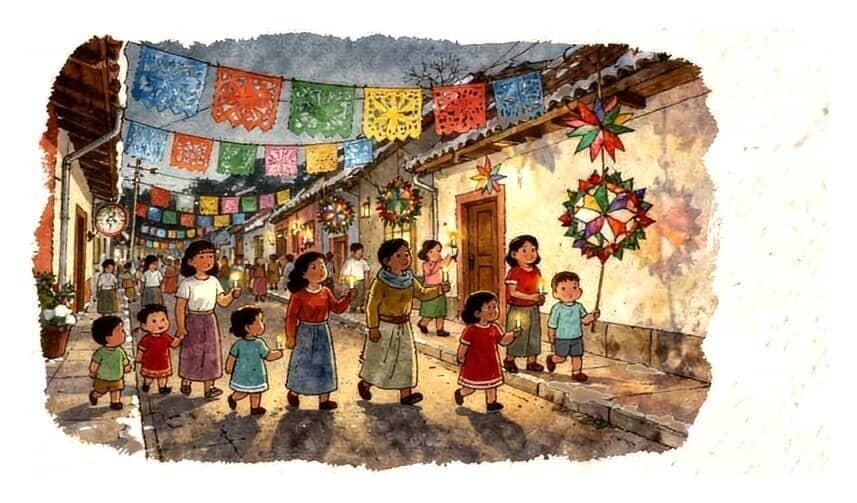
For the nine nights from December 16 to 24, neighbors gather in the evening and walk together, singing, acting out Mary and Joseph’s search for a place to stay in Bethlehem.
Nochebuena
December 24 has its own name in Mexico: Nochebuena, “the good night.” It is the night the nine posadas have been walking toward.
Three Kings’ Day, January 6
Christmas magicFor many Mexican children, the most exciting morning of the season is not December 25 but January 6, Día de Reyes. That is when the Three Kings leave presents beside the family’s nativity scene or under the Christmas tree. Santa Claus visits plenty of Mexican homes too, but January 6 still belongs to the Kings.
Nobody knows exactly when Mexican children first got presents on the morning of January 6; one historian at Mexico’s national university thinks the custom began only in the 1800s. Kings’ Day itself is far older there. As long ago as 1587, a friar watched a Kings’ Day pageant at a church near Guadalajara.
On Kings’ Day the family also shares the rosca de reyes, and somewhere inside it a tiny figure of the baby Jesus is hidden. Whoever finds it in their slice has a job to do: they host the tamales on February 2.
With feast after feast from December to January, people call the whole stretch one long “Guadalupe-Reyes” bridge, from the feast of the Virgin of Guadalupe all the way to the Kings’ day.
Tamales for Candelaria
February 2 is Día de la Candelaria, Candlemas, which remembers the baby Jesus being presented in the Temple forty days after his birth. In Mexico it is kept with tamales, the ones promised by whoever found the figure in the rosca. A historian at the national university traces the tamales partly to food offerings made before the Spanish arrived.
The flower of the good night
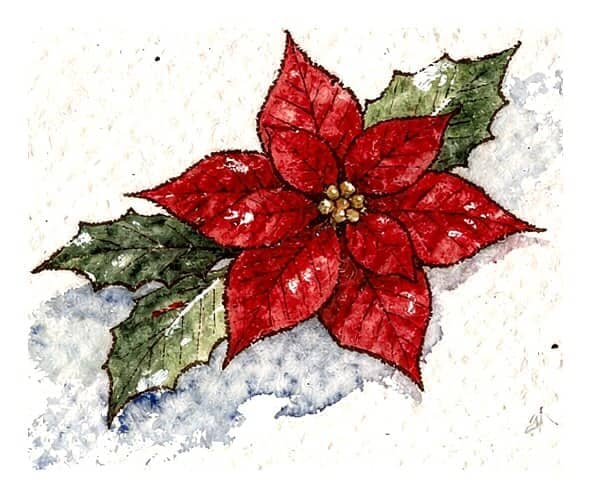
The poinsettia, a favorite Christmas flower in many countries, is a Mexican plant. It grew there for centuries before Christmas came to Mexico, and in Nahuatl it is called cuetlaxóchitl. Because it flowers in December, Franciscan friars named it flor de Nochebuena, the flower of Christmas Eve, and used it to dress their altars and nativity scenes.
Its English name came later. Joel Roberts Poinsett, the first United States minister to Mexico, saw the plant near Taxco in 1828 and brought it home, and it was named in his honor.
Quick answers
When do Mexican children get their Christmas presents?
Many open their presents on the morning of January 6, Día de Reyes, the Three Kings’ day. Many families keep Santa Claus too.
What is a posada?
One of nine evening processions, from December 16 to 24, that act out Mary and Joseph’s search for a place to stay in Bethlehem.
What does Nochebuena mean?
“The good night.” It is the Spanish name for Christmas Eve, December 24, used all over Mexico.
Why do Mexicans eat tamales on February 2?
On Kings’ Day, whoever finds the little baby Jesus figure in the rosca de reyes promises to host tamales on February 2, Día de la Candelaria.
Where does the poinsettia come from?
From Mexico and Central America. In Mexico it is called cuetlaxóchitl in Nahuatl and flor de Nochebuena in Spanish.
Read on: who brings the presents around the world, the first nativity scenes, who the wise men were, and why so many countries celebrate on Christmas Eve.
Where our facts come from
- Maria del Pilar Guzman, "Las Posadas Navideñas: Journeying to Bethlehem alongside the Holy Family", OSV News, December 16, 2025, Paragraph 2 (the nine nights, December 16 to 24); paragraphs 7 to 9 (the gathering, the procession and the pilgrims' singing); paragraph 16 (the songs, the same as in Mexico)
- OSV News, as above, Paragraph 17 (Christmas Eve, Nochebuena, Spanish for good night)
- Cambridge Dictionary, Spanish-English, "Nochebuena", The noun sense: the night of December 24, Christmas Eve
- Wiktionary, "Nochebuena", Spanish, Etymology: from noche buena (literally "good night")
- SpanishDict (SpanishDictionary.com), "Candelaria", Proper noun, sense 1 (religious): Candlemas; example: Los cristianos celebran la Candelaria el 2 de febrero
- Gaceta UNAM, "Los Reyes Magos seguirán existiendo", January 5, 2021, quoting historian Antonio Rubial García, Opening paragraph (January 6, gifts left by the nativity scene or under the tree); section "Los regalos a los niños", paragraphs 1 to 3 (no one knows when the custom began; the historian thinks the 1800s; Santa Claus between December 25 and January 6)
- Gaceta UNAM, as above, Section "Los Reyes Magos en la Nueva España", paragraphs 6 to 8 (fray Antonio de Ciudad Real, Tlaxomulco near Guadalajara, 1587)
- Gaceta UNAM, as above, Section "Los regalos a los niños", paragraph 4, the next-to-last (the "puente Guadalupe-Reyes")
- Gaceta UNAM, "Fiestas romanas y prehispánicas confluyen en el Día de la Candelaria", January 31, 2022, quoting historian Gisela von Wobeser, Paragraphs 1 to 3 (February 2, the Presentation forty days after the birth, tamales; the rosca and whoever finds the figure provides them); section "Deidades", paragraphs 1 and 2 (von Wobeser: the indigenous custom of offering food to the deities; tamales offered at Huauhquiltamalqualitztli)
- Maria Peña, "Poinsettia: How a U.S. Diplomat Made a Mexican Flower an International Favorite", Library of Congress blog, December 22, 2021, Paragraphs 1 and 2 (pre-Columbian, indigenous; native to Mexico and Central America); paragraphs 3 and 4 (Poinsett, first US minister to Mexico, Taxco, 1828; cuetlaxóchitl); paragraph 6 (Franciscan friars, flor de Nochebuena, altars and nativity scenes); paragraph 8 (named in his honor)