

I · The Story
Where is the Christmas story in the Bible?
 As the Bible tells itHow to read this bookReads aloud in 7 minutesAdded to the book
 True story
Two of the four Gospels tell the Christmas story: Matthew and Luke, near the start of each. Matthew tells it in his first two chapters, from Matthew 1:18 to 2:23, and Luke tells it in his, from Luke 1:5 to 2:40. The other two Gospels, Mark and John, do not tell of Jesus’ birth.
True storyAt a glance
- Matthew: chapters 1 and 2; the birth story runs from 1:18 to 2:23, after a family tree
- Luke: chapters 1 and 2; the birth story runs from 1:5 to 2:40, beside the birth of John the Baptist
- Only in Matthew: the wise men, the star, the escape to Egypt
- Only in Luke: the manger, the shepherds and the angels who came to them
- Mark and John: no birth story
Matthew’s telling
Matthew begins with Jesus’ family tree, traced back to Abraham (1:1–17). Then comes the story. An angel speaks to Joseph in a dream and tells him to name the child Jesus (1:18–25). Wise men from the east follow a star to Bethlehem (2:1–12). Warned in another dream, Joseph takes Mary and the child to Egypt (2:13–15), King Herod orders the killing of Bethlehem’s little boys (2:16–18), and after Herod dies the family settles in Nazareth (2:19–23).
They came into the house and saw the young child with Mary, his mother, and they fell down and worshiped him. Opening their treasures, they offered to him gifts: gold, frankincense, and myrrh.
Matthew keeps pausing to show the story fulfilling old prophecies: a virgin’s son called Immanuel, a ruler from Bethlehem, a son called out of Egypt, Rachel weeping for her children.
Luke’s telling
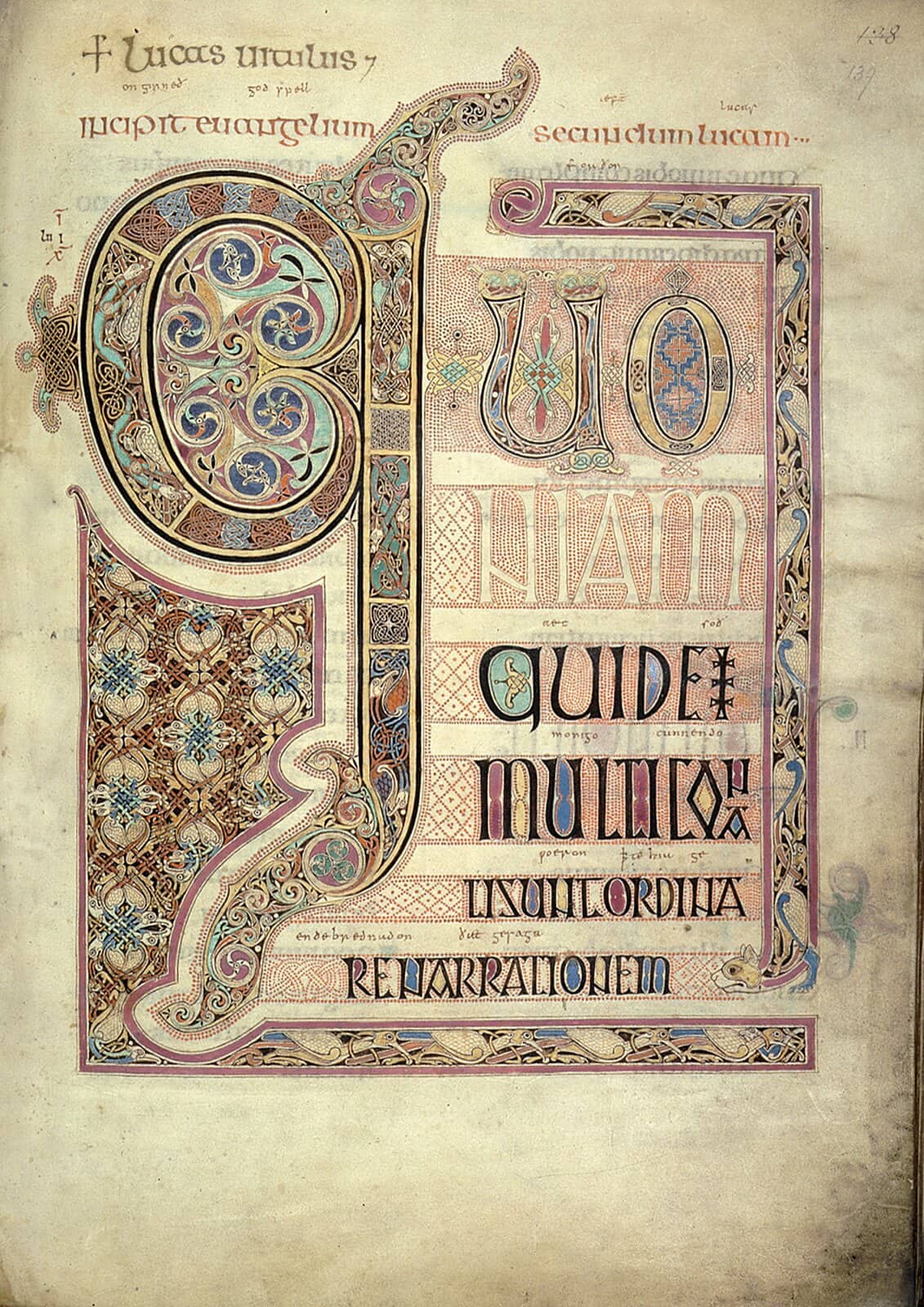
Luke opens by explaining that he researched carefully and wrote an orderly account for a man named Theophilus (1:1–4). Then he weaves Jesus’ birth together with the birth of John the Baptist: the angel’s visits to the priest Zechariah (1:5–25) and to Mary in Nazareth (1:26–38), Mary’s visit to Elizabeth (1:39–56) and John’s birth (1:57–80). Then come Jesus’ birth in Bethlehem (2:1–7), the visit of the shepherds, who heard the news from an angel (2:8–20), and the child’s naming and his presentation in the Temple in Jerusalem (2:21–40).
The angel said to them, “Don’t be afraid, for behold, I bring you good news of great joy which will be to all the people. For there is born to you today, in David’s city, a Savior, who is Christ the Lord. This is the sign to you: you will find a baby wrapped in strips of cloth, lying in a feeding trough.”
Luke ties the story to world events: a decree of the emperor Augustus, and an enrollment when Quirinius governed Syria.
How the two tellings differ
That much is the story as each Gospel tells it. Set side by side, the two tellings look like this.
True storyThe two accounts hardly overlap. Matthew has the wise men, the star and the escape to Egypt; Luke has the manger, the shepherds and the angels who came to them.
In Matthew the angel speaks to Joseph, again and again in dreams; in Luke the angel speaks to Mary, and it is Mary who keeps these things in her heart.
They differ, too, on where the family lives. In Luke the family starts and ends in Nazareth, with Bethlehem as the journey’s goal. Matthew finds the family in a house in Bethlehem, and only after Egypt do they settle in Nazareth.
Both agree on the heart of it: Mary, a virgin engaged to Joseph, gives birth in Bethlehem while Herod is king; the child is named Jesus, as an angel said; and he grows up in Nazareth.
Where to find each part
True story- Gabriel comes to Mary: Luke 1:26–38
- Joseph’s dream: Matthew 1:18–25
- The birth in Bethlehem, and the manger: Luke 2:1–7
- An angel brings the news to shepherds: Luke 2:8–20
- Simeon and Anna, in the Temple: Luke 2:22–38
- The wise men follow the star: Matthew 2:1–12
- Joseph takes the family to Egypt: Matthew 2:13–15
- Home to Nazareth: Matthew 2:19–23 and Luke 2:39
Neither Gospel gives a day or a season for the birth: both set it in the days of King Herod. How December 25 came to be Christmas is told on its own page.
Why only Matthew and Luke?
True storyNone of the Gospels says why only two of them tell of the birth. What we can see is where each one begins. Mark starts with John the Baptist preaching in the wilderness, and then with Jesus, already grown, coming to be baptized. John starts before time itself, with “the Word.”
The Word became flesh and lived among us. We saw his glory, such glory as of the only born Son of the Father, full of grace and truth.
True storyQuick answers
Which Gospels tell the Christmas story?
Matthew and Luke, each in its first two chapters. Mark and John do not tell of Jesus’ birth.
Where is the story of the shepherds?
In Luke 2:8–20.
Where are the wise men in the Bible?
In Matthew 2:1–12. Only Matthew tells of them.
Does the Bible say Jesus was born on December 25?
No. Neither Matthew nor Luke gives a day or a season for the birth.
More: the Christmas story, told short, who the wise men were, the Christmas story for children and the shepherds.
Where our facts come from
- World English Bible, Mark 1 and John 1, Mark 1:1–9 (the account begins with John the Baptist; Jesus comes to be baptized at 1:9); John 1:1–5 ("In the beginning was the Word"), 1:14 ("The Word became flesh and lived among us")
- World English Bible, Matthew 1 and 2, Matthew 1:1–17 (the family tree from Abraham); 1:18–25 (Joseph's dream and the naming); 2:1–12 (the wise men and the star; 2:11 quoted); 2:13–15 (Egypt); 2:16–18 (Herod's order); 2:19–23 (Nazareth); the prophets, with the translation's own cross-references: 1:22–23 (Isaiah 7:14), 2:5–6 (Micah 5:2), 2:15 (Hosea 11:1), 2:17–18 (Jeremiah 31:15)
- World English Bible, Luke 1 and 2, Luke 1:1–4 (the preface to Theophilus); 1:5–25 (Gabriel and Zechariah); 1:26–38 (Gabriel and Mary); 1:39–56 (Mary visits Elizabeth); 1:57–80 (John's birth); 2:1–2 (Augustus; Quirinius); 2:1–7 (the birth); 2:8–20 (the shepherds and angels; 2:10–12 quoted); 2:21–40 (the naming, the Temple, Simeon and Anna, home to Nazareth)
- World English Bible, Matthew 1–2 and Luke 1–2, read side by side, Matthew's scenes (1:18–2:23) and Luke's (1:5–2:40), none told in the other; Joseph's dreams, Matthew 1:20, 2:13, 2:19, 2:22; Gabriel to Mary, Luke 1:26–38; Mary "pondering them in her heart", Luke 2:19; Nazareth to Bethlehem and back, Luke 1:26–27, 2:4, 2:39; "into the house" in Bethlehem and the move to Nazareth, Matthew 2:11, 2:19–23; what both share: Matthew 1:18, 1:21, 1:23, 2:1, 2:23 and Luke 1:5, 1:27, 1:31, 1:34, 2:4–7, 2:21, 2:39; no day or season in either
- The Lindisfarne Gospels, early 700s, British Library, Cotton MS Nero D IV, f. 139r (the picture's record in design/assets/manifest.json), The plate: the opening page of Luke's Gospel