
X · Carols
Who wrote “Silent Night”?
 True storyHow to read this bookReads aloud in 6 minutesAdded to the book
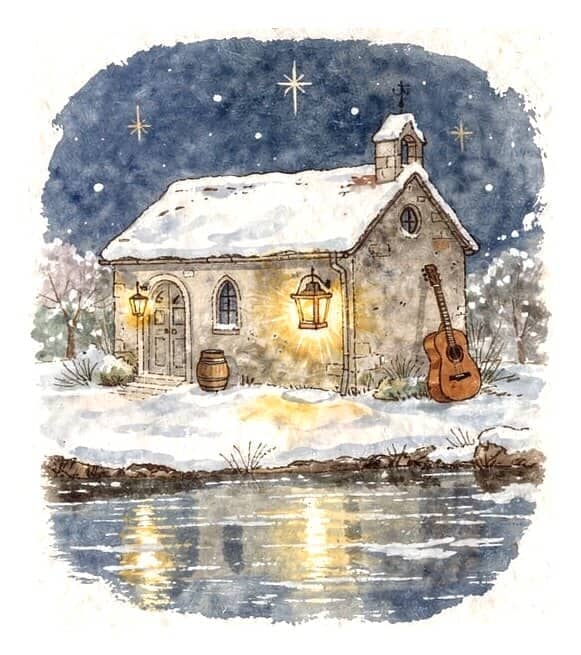


“Silent Night” was written by two men in Austria: Joseph Mohr, an assistant priest, wrote the words, and Franz Xaver Gruber, a schoolteacher and church organist, wrote the tune. It was sung for the first time on Christmas Eve, 1818, at St. Nicholas Church in Oberndorf, near Salzburg.
At a glance
- Words: Joseph Mohr, written as a poem in 1816, in Mariapfarr
- Tune: Franz Xaver Gruber, 1818
- First sung: Christmas Eve, December 24, 1818, at St. Nicholas Church in Oberndorf, near Salzburg
- Its German title: Stille Nacht! Heilige Nacht!
- Translated into: about 300 languages and dialects
The words came first
Joseph Mohr wrote the words as a poem in 1816, while he was an assistant priest in Mariapfarr, in Salzburg’s Lungau region. We know the date from the only surviving copy of the song in Mohr’s own hand, found in 1995, which gives the year 1816 beside his name. Historians date that copy itself to between about 1820 and 1825. Older books give the words a later date, Christmas Eve 1818 in Oberndorf; the copy in Mohr’s hand puts them two years earlier.
The first Silent Night
By Christmas Eve, 1818, Mohr was assistant priest at the new parish of St. Nicholas in Oberndorf. That day, as Gruber remembered it in an account he wrote in 1854, Mohr gave him the poem and asked for a tune for two solo voices, a choir and a guitar. Gruber, the organist there, who at the time was also the schoolteacher in Arnsdorf, wrote the melody that same day.
The song was sung at the Christmas Mass that evening. Mohr sang the tenor part and played the guitar, and Gruber sang the bass. Most of the people there were shipping workers, boat builders and their families, and Gruber wrote that everyone liked it.
Nobody knows for certain why the first Silent Night was played on a guitar. One guess is that the church organ was no longer working.
 A tale people tell
People also tell that a hungry mouse nibbled the organ’s bellows, so the organ could not play that night. That is a story, not a record.
The church where it was first sung no longer stands. A small Silent Night Chapel now marks the spot.
How it traveled
For years many people sang the song without knowing who wrote it. The first known printing, around 1833 in a booklet of “four genuine Tyrolean songs” from a Dresden and Leipzig publisher, left the writers’ names off, and so did a Leipzig hymnbook of 1838. Mohr’s own copy settles who wrote the tune: in its upper right corner, it names Gruber as the composer of the melody.
Traveling singing families from Tyrol, the Rainers and the Strassers, carried the song to the cities of Europe, and the Rainer Singers seem to have been the first to sing it in America, on Christmas Day 1839. The English words most people sing were translated in 1859 by John Freeman Young, an American clergyman. It has been translated into about 300 languages and dialects.
On the first Christmas Eve of the First World War, in 1914, a British private in the trenches remembered hearing German soldiers across no man’s land singing “Silent Night”. The Christmas truce of 1914 tells that story.
In 2011 Austria added “Silent Night” to its own national list of living traditions, the country’s inventory of intangible cultural heritage.
The words
Here are the first and third verses as John Freeman Young translated them, in the public domain, and the first verse in German as Gruber wrote it out around 1860.
Silent night, holy night,All is calm, all is brightRound yon virgin mother and child!Holy Infant so tender and mild,Sleep in heavenly peace,Sleep in heavenly peace.
Silent night, holy night,Son of God, love’s pure lightRadiant beams from Thy holy face,With the dawn of redeeming grace,Jesus, Lord, at Thy birth,Jesus, Lord, at Thy birth.
Stille Nacht! Heilige Nacht!Alles schläft; einsam wachtNur das traute heilige Paar.Holder Knab im lockigten Haar,Schlafe in himmlischer Ruh!Schlafe in himmlischer Ruh!
Quick answers
Who wrote “Silent Night”?
Joseph Mohr wrote the words, as a poem in 1816, and Franz Xaver Gruber wrote the tune in 1818.
When and where was “Silent Night” first sung?
On Christmas Eve, December 24, 1818, at the Christmas Mass in St. Nicholas Church in Oberndorf, near Salzburg, in Austria.
Why was “Silent Night” first played on a guitar?
Nobody knows for certain. One guess is that the church organ was no longer working.
Who translated “Silent Night” into English?
The English words most people sing are John Freeman Young’s, from 1859.
More: Christmas carols and music, the Christmas truce of 1914, Christmas in Germany, Christmas in Australia, Christmas in Austria and what a carol is.
Where our facts come from
- Silent Night Society (Stille Nacht Gesellschaft), "History of the Song", "Die Fakten" (1816: "Joseph Mohr creates the text to 'Silent Night!' in the form of a poem in Mariapfarr"; 1818: "In the schoolhouse of Arnsdorf, on Christmas Eve, Franz Xaver Gruber composes a melody"; "world premiere on Christmas Eve in the St. Nicholas church of Oberndorf near Salzburg"; the image caption "On the site of former St.Nicola church now stands the Silent-Night-Memorial Chapel"); "First Performance – Oberndorf, 1818" (Gruber's "Authentic Account" of December 30, 1854: "the then assistant priest Joseph Mohr at the newly established parish of St. Nicholas in Oberndorf handed over to the organist represented by Franz Gruber (who at the time was also school teacher in Arnsdorf) a poem, with the request to write a fitting melody for 2 solo voices together with choir and for accompaniment by guitar"; "Later the same day"; "included in the Christmas mass that evening"; "Mohr sang the tenor part and provided accompaniment with guitar, while Gruber sang bass"; "'general approval by all' in attendance (mostly shipping laborers, boat builders and their families)"; "there is no mention of the specific inspiration"; "One supposition is that the church organ was no longer working"); "Text of the Song – Mariapfarr, 1816" ("during the time he served as an assistant priest in Mariapfarr in Lungau"; "The score autographed by Mohr which was discovered in 1995 - the only extant one autographed by Mohr"; "Text von Joseph Mohr mpia Coadjutor 1816"; "estimated that this autograph was written between 1820 and 1825"; upper right: "Melodie von Fr. Xav. Gruber")
- Silent Night Society (Stille Nacht Gesellschaft), "Text and Music", "'Stille Nacht!' – Version Autograph VII" ("Text: Joseph Mohr, 1816"; "Melody: Franz Xaver Gruber, 1818"; "the complete German text from an authentic version of Franz Gruber's known as Autograph VII and written around 1860"; verse 1 as printed); the list of autographs, "Gruber-Autograph VII" ("estimated to be from around 1860")
- Silent Night Society (Stille Nacht Gesellschaft), "Spreading of the Song", "The path through Tirol into Europe", paragraph 2 (the Rainer family from Fügen and the Strasser family from Laimach); "The path into the 'New World'", paragraph 1 ("on Christmas Day, 1839, the Rainer Singers performed 'Silent Night!' – apparently for the first time on American soil") and final paragraph ("translations into over 300 languages and dialects"); "Spreading of the song locally" ("The names of the creators of the song, however, had soon become forgotten"); "The path through Tirol into Europe", the paragraph beginning "Emerging from the Zillertal Valley" ("the first known inclusion of the song in print occurred through the publisher A. R. Friese (Dresden and Leipzig) dated around 1833"; "Vier echte Tyroler Lieder" ("Four genuine Tirolian songs"); "notably without reference to its creators")
- Silent Night Society (Stille Nacht Gesellschaft), "Oberndorf" (the Society's page on the town), "Local Community – Oberndorf City", paragraph 1 ("The separation took place in 1816 through the Treaty of Munich. Oberndorf came to Austria and became an independent municipality.")
- Salzburgerland Tourismus (the Salzburg region's tourist board), "Myths and legends", "True and untrue stories about 'Silent Night'", the heading "The organ was defective and the mouse was to blame": "A well-known and popular explanation for the guitar is the story of the mouse, which is still told to this day. Supposedly, a little mouse had been so hungry that it started nibbling at the old bellows of the church organ. As a result, the instrument was damaged so badly that it could not produce a single sound on Christmas Eve"; "Truthfulness: 0 %"
- Austrian Commission for UNESCO, national inventory of intangible cultural heritage, "'Silent Night' – the Christmas carol", Entry header (inscribed 2011; domain "Social practices"; "Throughout Austria"); description, sentence 5 ("translated into some 300 languages") and sentence 7 ("The lyrics were written in 1816 by Joseph Mohr in the town of Mariapfarr, in Salzburg's Lungau region")
- Hymnary.org (Calvin Institute of Christian Worship), "Silent night, holy night" (the text page for Young's translation), Representative Text, stanzas 1 and 3 ("Translator (Sts. 1, 3): J. Freeman Young"); the translator's note ("John Freeman Young (1820-1885) Born: October 30, 1820, Pittston, Maine"; "Ordained a Protestant Episcopal minister"; "Carols for Christmas Tide (New York: Daniel Dana, Jr., 1859)"); "For Leaders" ("John Freeman Young's 1859 translation is the most familiar and often used"); "Notes" ("Without attributing the hymn's composition to Mohr and Gruber, the Leipzig Katholisches Gesang-und Gebetbuch first published the hymn in 1838"); copyright: Public Domain
- The Gazette (published by TSO for The National Archives), "World War 1: the Christmas truce of December 1914", Body text, the paragraph beginning "However, it was on Christmas Eve 1914" (Private Albert Moren, 2nd Queen's Regiment: "German soldiers could be heard singing Silent Night")
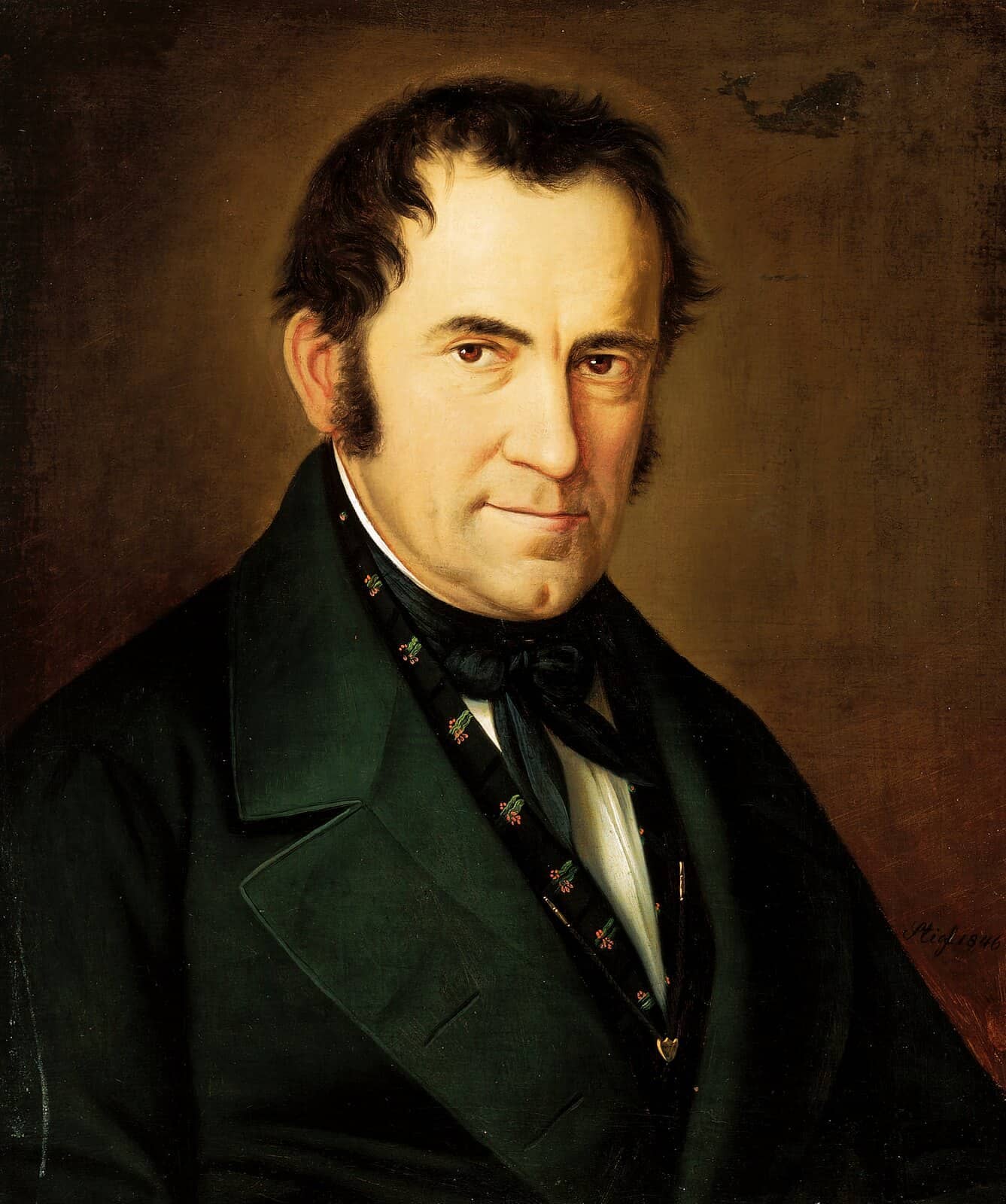
- Sebastian Stief, portrait of Franz Xaver Gruber, 1846 (the picture's record in design/assets/manifest.json, hist.gruber-portrait), The plate: credit "Sebastian Stief, Franz Xaver Gruber, 1846"; Wikimedia Commons file record (painted 1846; source: the stillenachtland.at image database)
