
II · History
What was the Christmas truce of 1914? What really happened
 True storyHow to read this bookReads aloud in 6 minutesRead it to a childAdded to the book
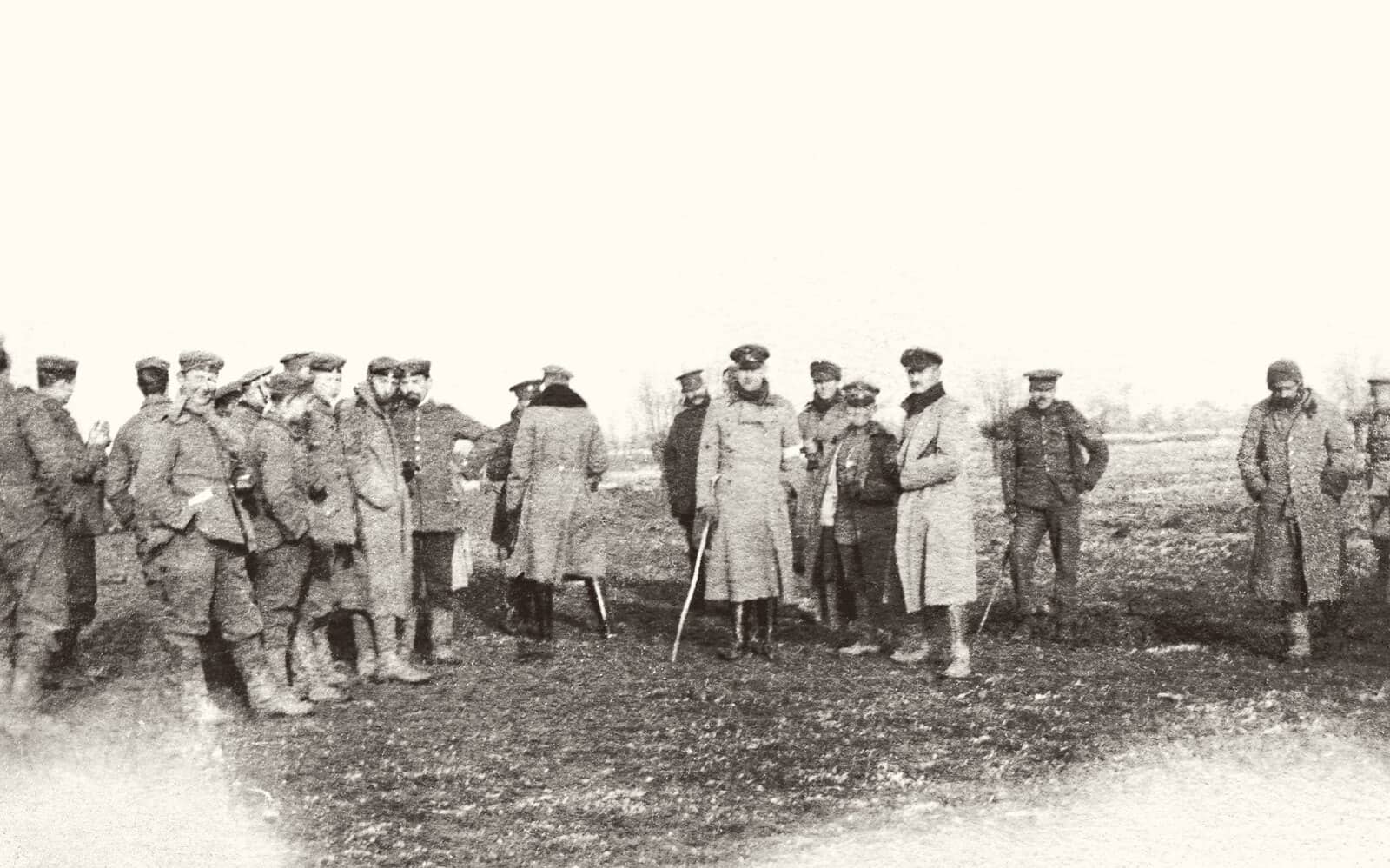


The Christmas truce was a short, unofficial peace in the first winter of the First World War. On Christmas Eve 1914, along many stretches of the Western Front, soldiers in the trenches stopped fighting, with no orders from above. They sang carols, and then climbed out to meet the enemy between the trenches, shake hands and swap small gifts.
At a glance
- When: Christmas Eve and Christmas Day, 1914, and in some places longer
- Where: along many stretches of the Western Front, but not all
- Who started it: the soldiers themselves, with no orders from above
- Football: kickabouts in places; whether a real match was played is still argued over
- Ordered to stop: December 29, 1914, by the German high command
How it began
Often it began with carols sung across the lines; then men climbed out and met in no man’s land, the ground between the trenches. German troops had been sent thousands of Christmas trees from home, and many stood them along the tops of their trenches.
One British private remembered hearing German soldiers across no man’s land singing “Silent Night” that Christmas Eve, and in places the two sides took turns singing carols to each other. The story of “Silent Night” has its own page.
Between the trenches
Enemies shook hands, showed each other photos of their families, and traded small gifts and food. Both sides also used the quiet for sad work: they went out into no man’s land to bury their dead, and in places British and German soldiers held the burial services together.
Henry Williamson, a young soldier who later became a novelist, wrote to his mother the day after Christmas that British and Germans had met between the trenches, shaken hands and swapped souvenirs. His letter was printed in the Daily Express newspaper in January.
It happened in many places but not all: in some sectors the shooting went on, and some offers of peace were turned down. Where French and Belgian soldiers made truces, they were usually shorter and more formal.
Did they really play football?
Soldiers’ letters mention football, and historians are sure that in places men did kick a ball about together. Whether there was ever a real match between the two sides is still argued over. Some accounts tell of games between British and German soldiers, but many letters only speak of a game being suggested, or pass on what the writer had heard about another part of the line.
No photograph of football at the truce is known. The picture often shared as one shows British soldiers playing near Salonika, in Greece, a year later.
After Christmas
In some places the quiet lasted beyond Christmas Day. But generals on both sides disapproved, and on December 29 the German high command forbade any friendly contact with the enemy.
In 1915 every army forbade it. A few soldiers still met briefly on Christmas Day that year, but nothing like the truce of 1914 happened again.
Read it to a child
Reads aloud in a minute
Long ago, during a terrible war, soldiers lived in muddy ditches called trenches, facing each other across a strip of ground. On Christmas Eve in 1914, some of them began to sing carols, and in some places the soldiers on the other side sang back. Then they climbed out, shook hands and shared what they had: food, little presents, and photos of their families at home. For a little while, there was peace.
Quick answers
What was the Christmas truce?
A short, unofficial peace at Christmas 1914, in the first winter of the First World War. Along many stretches of the Western Front, soldiers stopped fighting on their own, sang carols and met between the trenches.
Did soldiers really play football during the Christmas truce?
Some did, here and there: historians are sure that men kicked a ball about in places. Whether a real match was ever played between the two sides is still argued over, and no photograph of football at the truce is known.
How long did the Christmas truce last?
Over Christmas Eve and Christmas Day, and in some places the quiet lasted longer. On December 29 the German high command forbade any friendly contact with the enemy.
Did the Christmas truce happen again?
Not on that scale. In 1915 every army forbade it. A few soldiers still met briefly at Christmas 1915, but nothing like 1914 happened again.
More: when people started celebrating Christmas, Christmas in Germany and Christmas in wartime.
Where our facts come from
- Mark Cartwright, "The Christmas Truce: When the Fighting Paused in World War I", World History Encyclopedia, December 11, 2024, Introduction ("On Christmas Eve soldiers in the trenches spontaneously agreed to a ceasefire"; "Beginning with the singing of Christmas carols, the unofficial truce developed into soldiers meeting in no man's land"); German troops' Christmas trees ("many were placed on the parapets of the trenches"); photographs of loved ones, small presents, rations; details sent to bury the dead; section "Christmas Day" ("Some sectors did carry on fighting, and sometimes a peace offering was rebuffed by the other side"); section "Entertainments" (French and Belgian truces "typically shorter and more formal"; the peace "continued through Christmas Day"; "some groups of soldiers set up football matches, although these were not perhaps as numerous as legend supposes"); section "Aftermath" (in some areas the peace "was being prolonged"; "The German high command issued an order on 29 December prohibiting any fraternisation with the enemy"; "All armies involved strictly forbade such behaviour in 1915")
- The Gazette (published by TSO for The National Archives), "World War 1: the Christmas truce of December 1914", Body text, the paragraph beginning "However, it was on Christmas Eve 1914…" (Private Albert Moren, 2nd Queen's Regiment: "German soldiers could be heard singing Silent Night"); the paragraph beginning "Rifleman Graham Williams…" (the two sides took turns singing carols); the paragraph beginning "On Christmas Day itself…" ("reports of several football matches being played between opposing armies"; the 133rd Royal Saxon Regiment's game against "Scottish troops"; "numerous reports of Germans and British holding joint services to bury their dead")
- Peter Doyle, "The Christmas truce football match – a picture of a Greek kickabout is misappropriated yearly", The Conversation, December 14, 2021 (Goldsmiths Research Online), Paragraph 2 (soldiers met "between their trenches, shaking hands, sharing stories and posing for photographs"); section "No football at all?" (Henry Williamson's letter to his mother of December 26, printed in the Daily Express; "Historians know that there was some form of the game at the very least"; a Queen's Westminster Rifles letter offering a game not taken up; Simon Jones: many mentions were games offered and not played, or second-hand rumour; Iain Adams: some impromptu kickabouts likely); the photo caption and paragraph 4 (the picture shows a game in Greece in 1915, outside Salonika); section "True images" (no soldier kicking a ball in the Imperial War Museum's truce photographs); last paragraph (the British 26th Division)
- Western Front Association, "Ten Minutes Goodwill: A Happy Memory of the 2nd Xmas Truce, by William Ewart" (I Was There!, episode 93), Summary, paragraph 1 (a Scots Guards writer recalls soldiers fraternizing on the second Christmas of the war "despite strict orders to the contrary"); paragraph 2 ("anything in the nature of an unofficial armistice was met with severe punishment")
- Imperial War Museums, photograph Q 50719 (the picture's record in design/assets/manifest.json; Wikimedia Commons), The plate: credit "British and German troops in no man's land, Christmas 1914"
