

IX · Faiths
Why do some Orthodox churches celebrate Christmas on January 7?
 True storyHow to read this bookReads aloud in 9 minutesAdded to the book
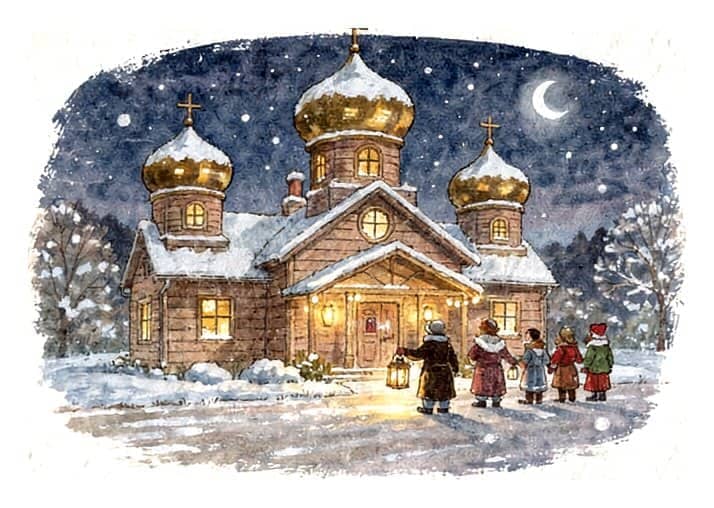
Because they still count the year on the old Julian calendar. Those churches keep Christmas on December 25, but their December 25 is a Julian date, and the Julian calendar today runs 13 days behind the calendar most of the world uses, so it falls on January 7. Not every Orthodox church does this: the churches of Greece, Cyprus and Romania, among others, celebrate on December 25.
At a glance
- On January 7: the Orthodox churches on the old Julian calendar, such as the Russian Orthodox Church and the Orthodox Patriarchate of Jerusalem; this season, ,
- On December 25: the churches of Greece, Cyprus and Romania, on the revised calendar, and the Orthodox Church in America’s own calendar, though its parishes may vote to keep the old one
- Why the gap: the Julian calendar runs 13 days behind today, and the gap grows by a day after 2100
- Christ’s baptism, the Theophany: January 19 on the old calendar
- Before Christmas: a fast of up to 40 days
Two calendars
The story begins in Rome. In 46 BC Julius Caesar gave the Romans a new calendar, worked out on the advice of the Egyptian astronomer Sosigenes. It is called the Julian calendar, after him. But it made the year about 11 minutes too long, and over the centuries the calendar and the seasons slowly drifted apart.
By 1582 the drift had grown so large that Pope Gregory XIII brought in a corrected calendar, the Gregorian calendar, which most of the world uses today. The Orthodox Church, which had separated from the Church of Rome centuries before, did not follow the Pope’s reform. It kept the Julian calendar, and the drift went on.
By 1923 the two calendars were 13 days apart, and they still are. So a church that keeps Christmas on the Julian December 25 celebrates on January 7 of the calendar on your wall. The gap grows by one more day in 2100, so after that, old-calendar Christmas will fall on January 8.
Which churches keep which day
In May 1923, Orthodox church leaders met in Constantinople to settle the question. There the Serbian scientist Milutin Milanković proposed a revised Julian calendar, which keeps the same dates as the Gregorian one, though not quite the same leap years. The churches of Greece, Cyprus and Romania took it up, and they celebrate Christmas on December 25, as Western churches do.
The Russian Orthodox Church kept the old calendar, and so it celebrates on January 7. The Orthodox Church in Poland tried the new calendar and then went back to the old one. The Greek Orthodox Patriarchate of Jerusalem keeps the old calendar too, and celebrates Christmas in Bethlehem on January 7. The Orthodox Church in America’s own calendar lists the Nativity on December 25, and its parishes may vote to keep the old calendar for the fixed feasts.
| Church | Its calendar | Christmas |
|---|---|---|
| The Russian Orthodox Church | the old Julian calendar | January 7 |
| The Orthodox Church in Poland | the old Julian calendar | January 7 |
| The Greek Orthodox Patriarchate of Jerusalem | the old Julian calendar | January 7 |
| The churches of Greece, Cyprus and Romania | the revised Julian calendar | December 25 |
| The Orthodox Church of Ukraine | the revised calendar, since 2023 | December 25 |
A recent change came in Ukraine. In 2023 the Orthodox Church of Ukraine moved its fixed feasts to the revised calendar, starting on September 1, and its Christmas moved from January 7 to December 25. No one was made to change: a parish where most people prefer the old calendar may keep it. The Ukrainian Greek Catholic Church in Ukraine decided on the same change, to start on the same day, September 1, 2023, and let parishes that were not ready keep the old calendar until September 2025.
How Orthodox Christians keep Christmas
Customs differ from country to country and from church to church. Before Christmas many Orthodox Christians keep a fast of up to 40 days, setting aside meat, dairy, fish, wine and olive oil. After a vigil on Christmas Eve, Christmas itself is one of the twelve Great Feasts of the Orthodox Church, kept with church services and celebration at home.
 As church tradition tells it · Orthodox tradition
In Orthodox churches a Christmas hymn sings of the cave where Christ was born, and at the Christmas Liturgy the Gospel reading is the visit of the wise men.
In Georgia, people walk to church in a Christmas procession called Alilo, singing carols as they go. The name comes from a song children traditionally sing on Christmas Eve as they go from door to door, collecting small gifts and coins, and children in Romania and Greece go caroling door to door too.
The old calendar moves other days as well. Churches on the old calendar celebrate Christ’s baptism, the Theophany, on January 19, and keep Saint Nicholas’s day on December 19.
Other churches, other days
Other churches keep their own days, too. Egypt’s Coptic Orthodox Christians celebrate Christmas on the 29th day of their month of Kiahk, which this season falls on , . The Ethiopian Orthodox Tewahedo Church keeps Genna, Ethiopian Christmas, on January 7 (Christmas in Ethiopia).
As church tradition tells it · Armenian traditionThe Armenian Apostolic Church celebrates Christ’s birth and his baptism together, in one feast.
That feast falls on January 6, after a lamp-lighting service on the evening before. In the Holy Land, the Armenian Patriarchate of Jerusalem follows the old calendar, so its Christmas falls on January 19. The main churches’ dates for this season are on when Christmas is, church by church.
Quick answers
Is Orthodox Christmas always on January 7?
No. Orthodox churches on the old Julian calendar celebrate on January 7, and so do the Coptic and Ethiopian churches, which keep calendars of their own. Orthodox churches on the revised calendar celebrate on December 25, and after 2100, old-calendar Christmas will fall on January 8.
Why are the calendars 13 days apart?
The Julian calendar makes the year about 11 minutes too long. Over the centuries those minutes added up, and by 1923 the gap had reached 13 days.
Do Russian Orthodox Christians celebrate Christmas on January 7?
Yes. The Russian Orthodox Church keeps the old calendar, so its Christmas falls on January 7.
Do Greek Orthodox churches celebrate on December 25?
The Church of Greece does, on the revised calendar. The Greek Orthodox Patriarchate of Jerusalem, though, keeps the old calendar and celebrates in Bethlehem on January 7.
When did Ukraine’s Orthodox Church change its Christmas?
In 2023. From September 1 that year, the Orthodox Church of Ukraine kept its fixed feasts on the revised calendar, so its Christmas moved to December 25. Parishes that prefer the old calendar may keep January 7.
When is old-calendar Christmas this season?
On , .
More: Christmas and the world’s faiths, why Christmas is on December 25, Christmas in Ethiopia, the Armenian Church’s Christmas and Christmas in Russia.
Where our facts come from
- Erin Blakemore, "Why some people celebrate Christmas in January", National Geographic, December 26, 2019 (updated December 30, 2022), Intro ("a calendar that differs from the one used by most of the world today"); section "Christianity adopts a standardized calendar", paragraphs 2–3 (the Julian calendar adopted by Julius Caesar in 46 B.C. on the advice of the Egyptian astronomer Sosigenes; the year overestimated "by about 11 minutes"; the drift); section "Christianity's great calendar schism", paragraphs 1–4 (Pope Gregory XIII, 1582, the Gregorian calendar; the Orthodox Church split in the Great Schism of 1054, rejected the Gregorian calendar and kept the Julian; "By 1923, there was a 13-day difference"); section "Resolving the Orthodox calendar crisis", paragraphs 1–4 (May 1923, the Pan-Orthodox Congress in Constantinople; Milutin Milanković's revised Julian calendar, which "shares its dates with the Gregorian calendar, though it doesn't share every leap year"; adopted by the churches of Greece, Cyprus and Romania, "now celebrate Christmas on December 25"; Russia refused; Poland adopted it, then dropped it; January 7 "until 2100, that is, when it will move to January 8"); section "Orthodox Christmas traditions", paragraphs 1–2 (traditions differ; a fast of up to 40 days without meat, dairy, fish, wine and olive oil; a vigil on Christmas Eve; one of the Church's 12 Great Feasts, churchgoing and celebration at home; Alilo in Georgia, the procession and the children's door-to-door song; the custom also in Romania and Greece)
- Greek Orthodox Patriarchate of Jerusalem, "Christmas Eve at the Patriarchate" (2019) and "The Christmas Feast at the Patriarchate" (2018), "Christmas Eve at the Patriarchate", paragraph 1 ("On Monday, December 25, 2018/ January 7, 2019, the Patriarchate celebrated the feast of the Nativity … in Bethlehem"); "The Christmas Feast at the Patriarchate", paragraph 1 (Bethlehem, "December 25, 2017/ January 7, 2018")
- Orthodox Church in America, "Lives of the Saints", December 25, 2026, Page date heading "Friday, December 25, 2026"; the feast "The Nativity of our Lord God and Savior Jesus Christ"
- The Holy Synod of the Orthodox Church in America, "The 'Revised' Julian Calendar: Memorandum of Explanation" (undated; as published by Holy Trinity Orthodox Cathedral, San Francisco), The paragraph beginning "The data presented above are taken from published documents", its last two sentences ("Parishes in the Orthodox Church in America have been granted permission by the Holy Synod of Bishops to vote on whether or not they wish to use the 'Old Style' Julian Calendar or the 'Revised' Julian Calendar to determine the immovable feast days. Final approval of any calendar change is reserved to the diocesan bishop.")
- Orthodox Church in America, "Nativity of Christ" (The Orthodox Faith, Worship, The Church Year), The Kontakion after the paragraph ending "Thus, we sing in the Church" ("the earth offers a cave to the Unapproachable One"); the paragraph beginning "The Christmas Liturgy begins with psalms of glorification and praise" ("The Gospel reading is the familiar Christmas story from Matthew (2.1–12)")
- Orthodox Church of Ukraine, "Appeal of the Local Council of the Orthodox Church of Ukraine to the Ukrainian people" (Звернення Помісного Собору Православної Церкви України до українського народу), July 27, 2023; with the church's news "Вийшов друком Православний церковний календар на 2024 р.", August 1, 2023, Appeal, under "Дорогі українці!", paragraph 1 (from September 1 the church moves to the new calendar style; the New Julian calendar for the fixed feasts; "ми нікого не примушуємо": communities may keep the familiar calendar where the majority wishes); news, paragraphs 1–2 ("з 1 вересня 2023 року")
- RFE/RL, "Orthodox Church Of Ukraine Approves Calendar Switch In Widening Diversion From Russia", May 24, 2023, Paragraph 1 ("will move Christmas forward to December 25"); paragraph 3 (Christmas had been on January 7)
- Ukrainian Greek Catholic Church, "Head of the UGCC on the calendar reform: 'I hope that Orthodox brothers will follow us'", February 6, 2023, The last paragraph ("As we have reported…": "the Synod of Bishops of the UGCC in Ukraine decided that starting September 1, 2023, the UGCC in Ukraine will switch to a new style for fixed holidays while maintaining the current Paschalia. However, parishes that do not feel ready for this step will be able to continue to live according to the Julian calendar until September 2025 with the blessing of their bishop."); paragraph 6 ("This year we will celebrate Christmas … on December 25")
- Holy Trinity Russian Orthodox Church (a parish of the Moscow Patriarchate), "Fixed Great Feasts", List entries 1 and 2 ("January 7 – The Nativity of our Lord God and Savior Jesus Christ"; "January 19 – The Baptism of Our Lord and God and Saviour Jesus Christ")
- Orthodox Church in America, "Lives of the Saints", January 6, 2027, The feast's heading ("Feast of the Theophany of our Lord and Savior Jesus Christ"); first sentence (the Theophany "through the Baptism of the Lord")
- St. Nicholas Center, "Who is St. Nicholas?", Section "Who Was St. Nicholas?", the feast-day sentence (December 19 if on the Julian Calendar)
- CopticChurch.net, "Readings for Thursday, January 7th" (2027) and "Synaxarium Kiahk 29", Readings: the page heading for January 7, 2027, marked "Christmas"; Synaxarium: title and entry 1 ("The Feast of the Nativity of Our Lord Jesus Christ (Christmas)")
- Ethiopian Orthodox Tewahedo Church, "Religious Holidays and Calendar: The Liturgical Year", Section "5. CHRISTMAS" (Liddet or Gena, 7th January, Tahsas 29)
- Eastern Diocese of the Armenian Church of America, "Armenian Christmas at St. Vartan Cathedral on Jan. 6, 2026", Heading "Armenian Christmas Eve (Jan. 5)" (the Jrakalouyts or lamp-lighting evening service); heading "Armenian Christmas (Jan. 6)" (the Feast of the Nativity and Theophany) and the next paragraph ("not only the birth of Christ, but also his baptism by John the Baptist")
- Mother See of Holy Etchmiadzin, "Feast of the Epiphany in the Nativity Cathedral of Bethlehem", January 22, 2024; Eastern Diocese of the Armenian Church of America, "Two Armenian Patriarchs Meet in Jerusalem", January 20, 2023, Etchmiadzin, the caption ("The Armenian Patriarchate of Jerusalem celebrates Christmas according to the old calendar, on January 19"); Eastern Diocese, paragraph 1 ("at midnight on January 18/19, in accordance with festal calculations of the old Julian Calendar")